Bootleg: Windows Xp Nes
The 8-bit Famicom hardware was never meant to handle a multitasking environment. The bootlegs worked by using a and moving sprites to represent the cursor and icons. All You Need to Know About Windows XP | Lenovo US
The music began to slow down, the pitch dropping until it was a low, rhythmic thrumming. I reached the end of the "Bliss" level and found a hole in the ground. It wasn't a pit; it was a hole in the textures, revealing the raw hex code of the game beneath. I jumped in.
The Windows XP NES Bootleg is essentially a customized version of Windows XP that can run on the NES console. This is achieved through a combination of clever coding, hardware modifications, and a healthy dose of creativity. The bootleg uses a specialized loader that allows Windows XP to boot on the NES, which is equipped with a mere 2KB of RAM and a 16 MHz processor. windows xp nes bootleg
Clicking on the desktop icons revealed that this "Windows XP" was entirely hardcoded. There was no actual file system, kernel, or multitasking capabilities. Instead, the icons acted as a menu select screen for built-in 8-bit applications:
The ultimate goal for most kids who owned these cartridges was the game application. Double-clicking the "Games" icon usually opened a launcher containing classic, often pirated, NES games like Super Mario Bros. , Duck Hunt , or Tank 1990 . Preservation and the Modern Retro Community The 8-bit Famicom hardware was never meant to
Dumping these ROMs presents a unique challenge for preservationists. Because these cartridges were manufactured cheaply in underground factories, they often used non-standard, proprietary memory mappers to bypass NES hardware limitations. Emulating them accurately requires developers to reverse-engineer these custom mappers and write specialized code for modern NES emulators like FCEUX or Nestopia. Today, digital archives host various versions of these Windows XP ROMs, allowing curious tech enthusiasts to experience the novelty of an 8-bit "Windows" boot sequence on modern hardware.
To the untrained eye, or a hopeful parent on a tight budget, these machines promised the magic of a modern operating system on a shoestring budget. In reality, they were a brilliant, bizarre illusion engineered entirely within the strict limitations of 1983 Nintendo Entertainment System (NES) hardware. I reached the end of the "Bliss" level
Remember when your imagination was better than your graphics card?
– A static or barely interactive NES program with a blue taskbar, a “Start” button that just beeps, and maybe a fake My Computer icon. No files. No networking. Just a pixelated flex.
He opened the start menu. Instead of "All Programs," it read
This was the point where a normal bootleg would crash. The NES had 2KB of RAM. Windows XP required gigabytes. This shouldn't exist. The code shouldn't run. It was like trying to pour an ocean into a thimble; the thimbl shouldn't just hold it, it should be crushing the water into a singularity.


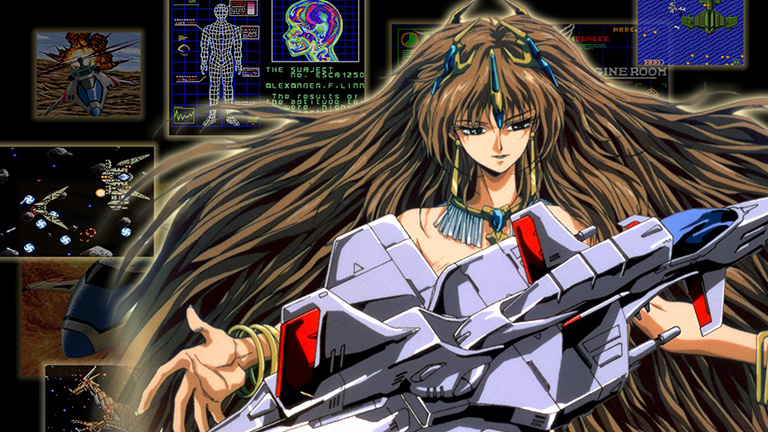

So, basically, best H-Shooter ever?
The graphics aren’t the best. The girls look kind of plain. I guess that’s because it’s an H game.
I don’t think the screens look too bad.
I wish Shooting Game Builder was available in English.
Played this. It’s pretty good.
A demo for the Japanese version can be found here: http://www.dlsite.com/ecchi-eng/work/=/product_id/RE202553.html
Good review. I played the demo and couldn’t keep the bullet counter going. Is that in one of the modes?
Main artwork looks pretty amateur. 🙁
Good review. I’m a little surprised. You’ll H games kind of suck when it comes to quality.
I just noticed the dong in the bottom pic. Shoot the purple penis!!!
I want to see home Vag boss pics. lol.
Added to my wishlist. I hope there’s a markdown on this for the Winter sale.